Used battery sorting: safe & efficient
At Sortbat in Tienen, our battery sorting facility processes used portable and household batteries collected by Bebat in Belgium, as well as from partners abroad. In this state-of-the-art battery sorting facility, over 500,000 batteries pass along the conveyor belt every single day.
Why is battery sorting so important?
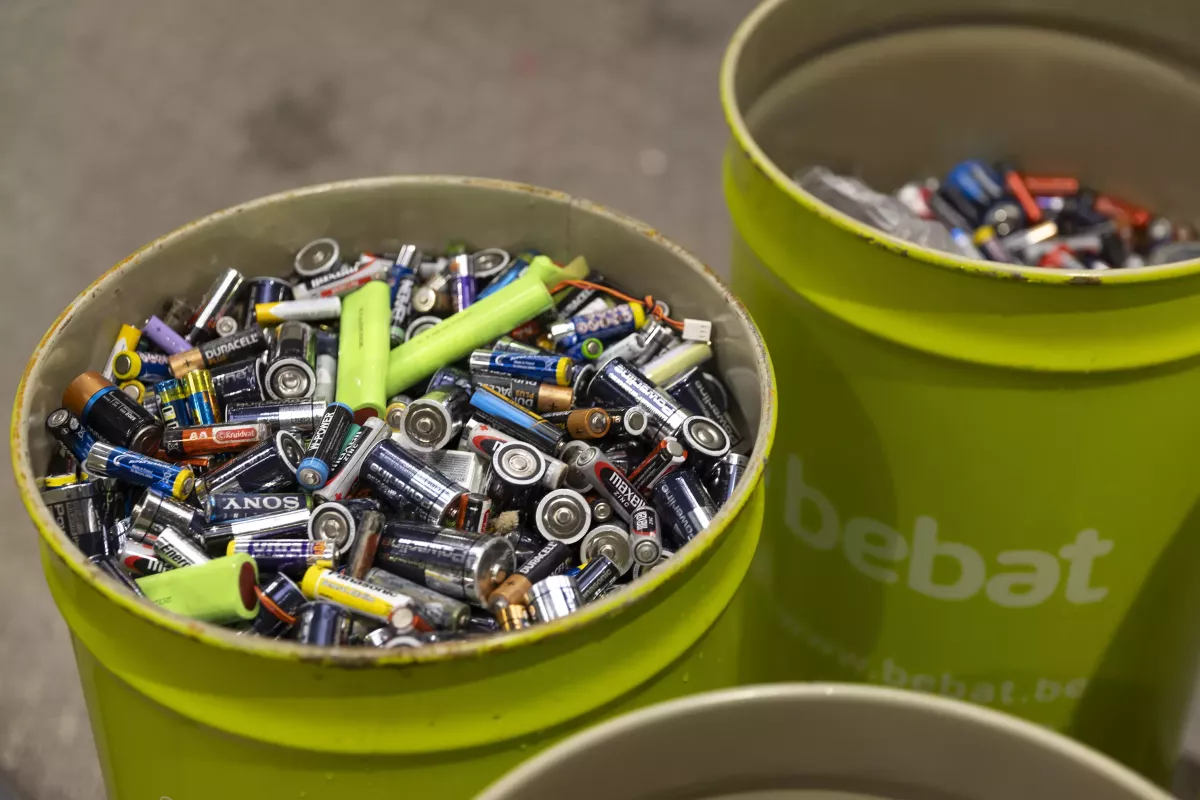
Not all batteries are the same. Household batteries such as alkaline, lithium, button cells and rechargeable batteries contain different materials and therefore require specific sorting and recycling processes. That’s why accurate sorting is essential. At Sortbat, we lead the way with a 99.5% sorting accuracy rate – a European record.
- Miloud Lekfif, Chief Operations OfficerCans, light bulbs, even nappies. Some things just don’t belong in battery bins. Luckily, our team removes them all with care.
Our battery sorting process step by step
No matter where you deposit your batteries in Belgium — whether it’s a supermarket, a DIY store or a recycling centre — they all travel to Tienen, Belgium, in ASP’s: drums of around 60 kg. This is where the sorting process of the different types of batteries begins.
Every battery that arrives at Sortbat enters the sorting process through a wide conveyor belt. Large batteries, for example from e-bikes, power tools or lighting, are carefully removed by our staff.
These are immediately sorted based on their chemical composition: electronic devices with built-in batteries or rechargeable lithium, alkaline, lead, NiMH and NiCd packs.
Plastic bags or other non-battery waste is also filtered out at this stage. The remaining flow moves through a sieve system to separate smaller items like AA/AAA batteries and vermiculite.

The sieve separates batteries in several fractions based on their respective sizes.
In the first step, the smallest parts are separated. These are the button cells and small debris, together with vermiculite. This fraction will not go through the next steps of the sorting process and is disposed of and recycled appropriately.
The second step separates individual batteries from battery packs. The sieve features an optimised layout for this separation. Individual batteries are transported to the feeding device, while battery packs go directly to the characterisation unit.
The individual batteries and the battery packs are transported to the singulator, via their respective feeding channels, where they are put in single lines and pass through to the characterisation unit for sorting.
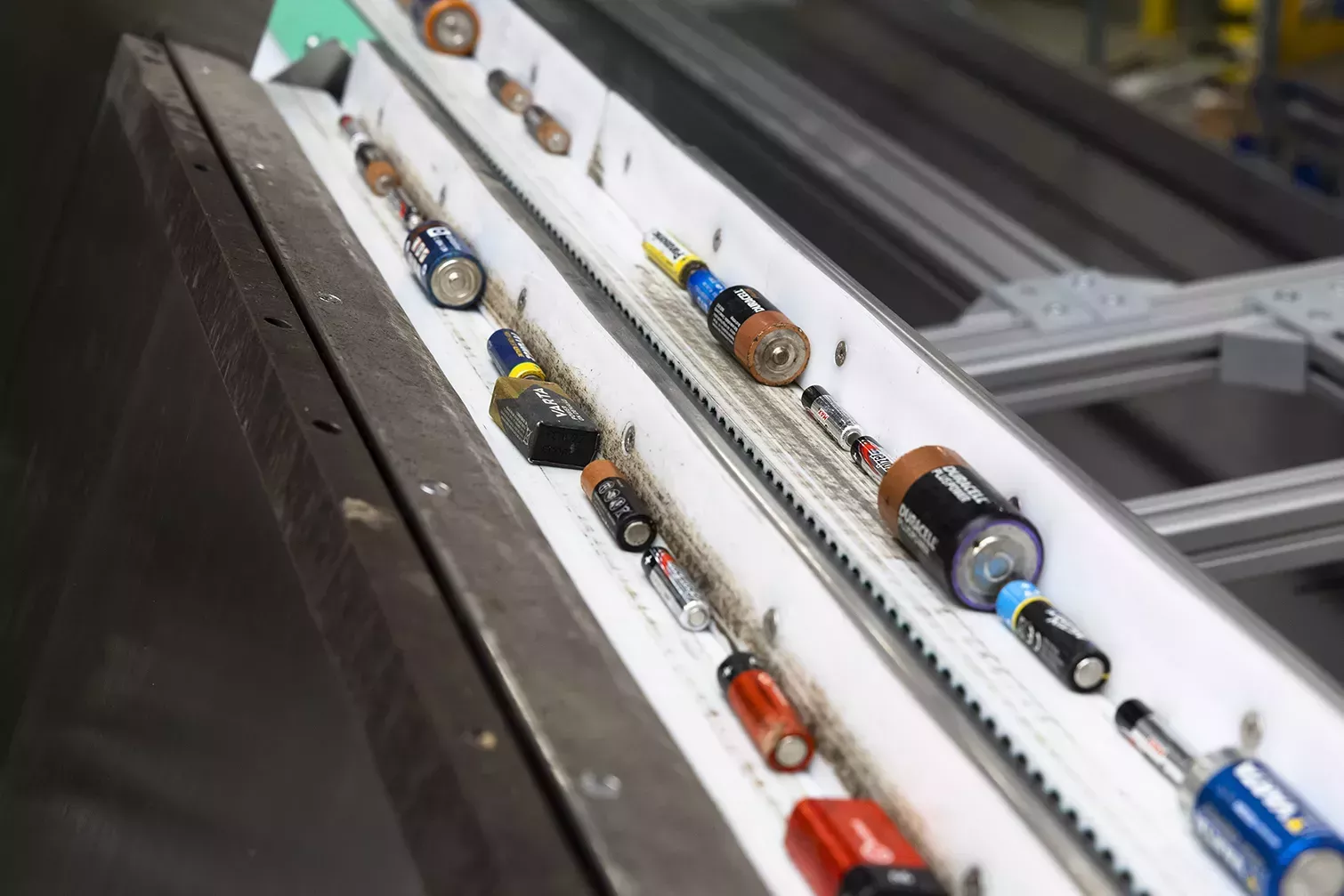
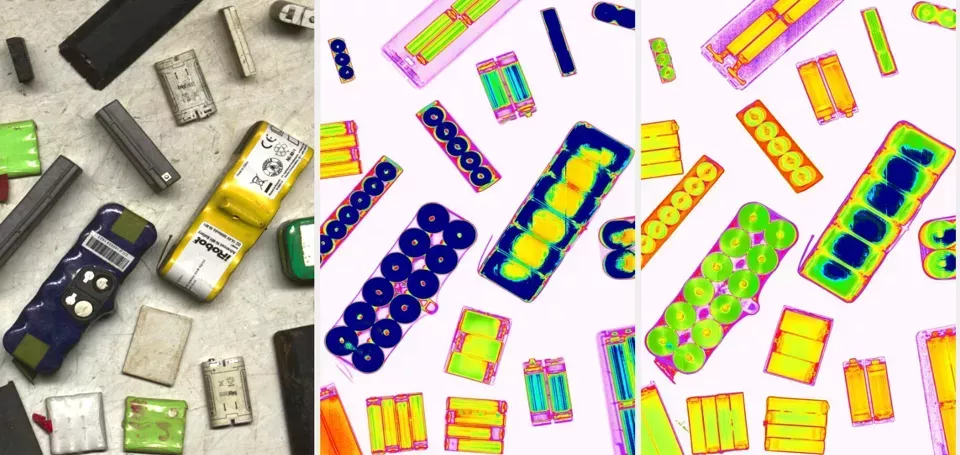
The final and most advanced step is our AI-based sorting. As battery-powered devices continue to multiply, so does the complexity of sorting these batteries. That’s why Sortbat developed Xbat.ai in collaboration with VITO, a Belgian research leader in sustainability.
Using a combination of artificial intelligence (AI) and X-ray scanning, Xbat.ai accurately identifies all household battery types, even if they are corroded. From button cells to battery packs, this automated system classifies batteries by chemistry: lithium, alkaline, zinc-carbon and more.
Once identified, each battery is automatically placed into the correct container, ready for safe, compliant and traceable recycling. This technology enhances safety, reduces costs and sets a new industry standard for battery sorting.
AI-based battery sorting technology receives industry recognition
The battery sorting technology developed by Sortbat in collaboration with VITO is commercialised by Smiths Detection and was shortlisted in the “AI or Technology of the Year” category at Awards for Excellence in Recycling & Waste Management 2026.
Although Smiths Detection did not win the award, being shortlisted already represents an important recognition of the innovation, collaboration, and technological progress achieved through this project.
Sortbat in the media

Sortbat is featured in a video by the Belgian research centre VITO about innovative sorting technologies for complex battery streams. As batteries become increasingly complex, efficient sorting plays an important role in enabling high quality recycling and the recovery of valuable raw materials.
The video highlights research and technological developments aimed at improving battery sorting and supporting a more circular use of critical raw materials.

Need support with battery sorting?
We’re happy to support international partners with expert sorting services. Contact us to discuss the possibilities.